
L. H. Hoffmann
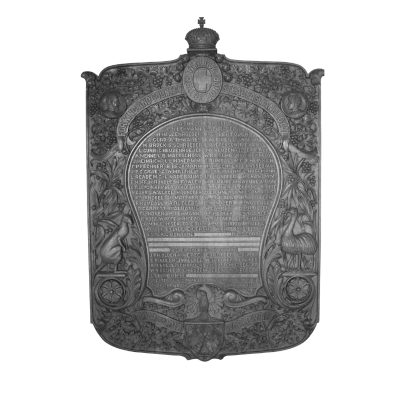
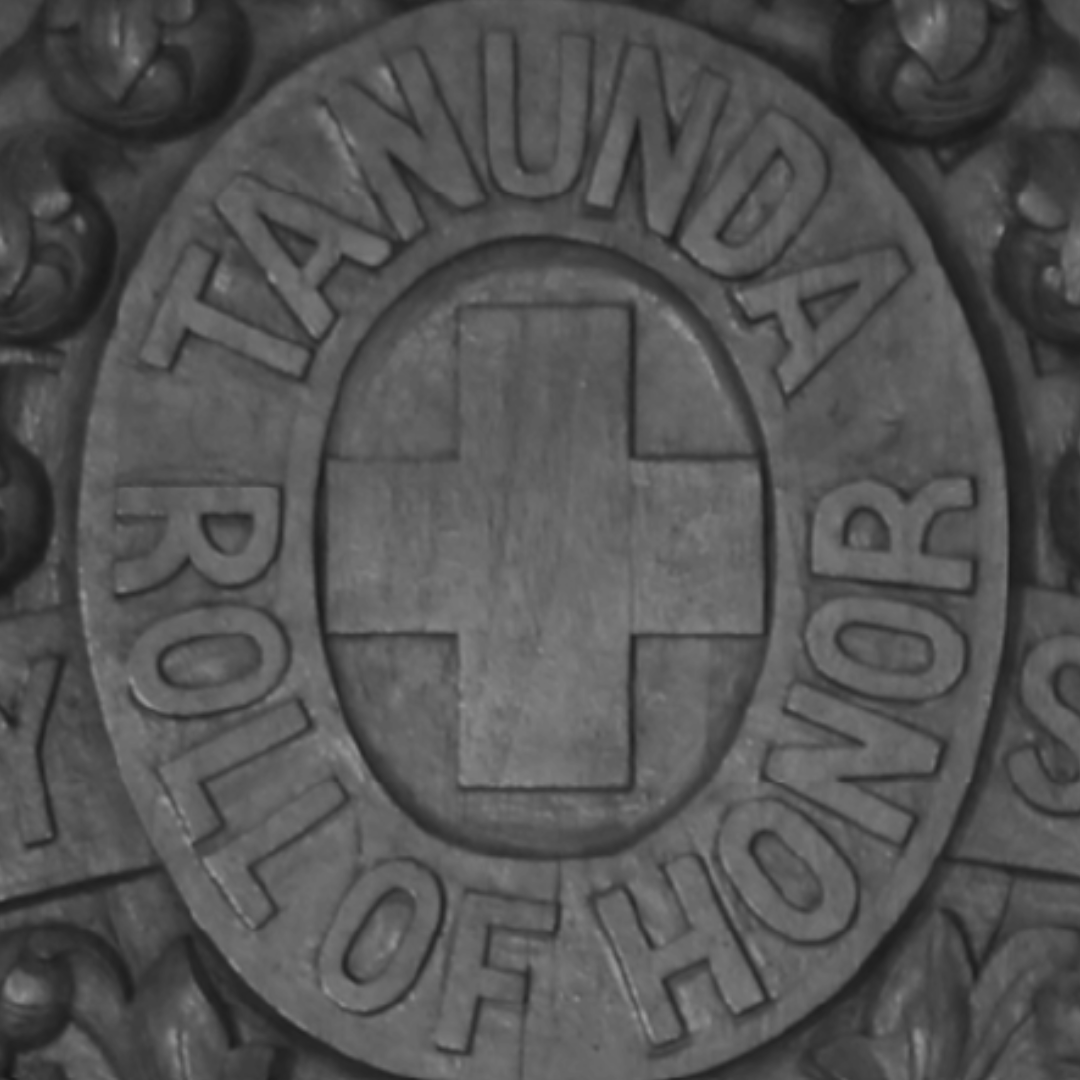
Tanunda Soldiers’ Memorial Hall | WW1 Roll of Honour
Louis Herald Hoffmann
Born: 11th December 1893
Died: 17th June 1947
Buried: Barmera Cemetery
Louis was a Tanunda boy, a very long way from home when in 1917 he wrote in his diary that the western front in France was ‘…like hell with the lid open’
He had enlisted on August 11th, 1915 and was assigned initially to the 6th reinforcements of the 27th Battalion, Australian Imperial Forces. He embarked from Adelaide on the steamer ‘Benalla’ on October 27th, 1915, via Freemantle, to Egypt. On February 22nd he notes in his diary that ‘They have split up the 6/27th. We are in the 10th Battalion – all our Tanunda boys together – In fact all our lot is going to join the 10th’.
The 10th Battalion was one of the first infantry units raised for the AIF during the first world war. The battalion was recruited in South Australia and until 1916 was commanded by Stanley Price-Weir who in 1920 officiated at the opening of Tanunda’s war memorial Cross of Sacrifice. Commonly known as ‘The South Australian Battalion’ the first deployment was at ANZAC Cove, then later across key battlefields on the Western Front.
Louis’ diaries regularly mention other soldiers also listed on the Honour Roll, particularly Roland Riebe. Louis referred to him as Rolly, and while it is impossible to know how long they had been friends, the familiar way Rolly is referenced indicates that he expects his family to know who he is talking about. It is easy to assume that in a small town like Tanunda, they knew each other before enlisting.
Louis was part of an Australian Infantry who had a reputation amongst British officers as needing ‘Less spit and more polish’1. The Australians were renowned for their resilience and valour and were regularly promoted under fire, but there were many who could never understand the need for parades or ceremonial practice (like saluting) and the Australian larrikin soldiers were equally demoted while out of it. Louis was one of them and his war record is dotted with minor penalties for brief periods of being AWOL, but only ever while moved back from the front lines. In the trenches he remained steadfast and stoic, talking about the mud, and privations and the relentless bombardment. On April 16th 1917 “Just at daybreak we were wanted to rush up to help the 11th. The Germans counter-attacked – we just got there in the nick of time, drove them back with rifle and Machine Gun fire – made a nice mess of them – got hung up on their own barb wire – hundreds- as thick as flies. They left a big percentage of their dead behind, also a big lot of wounded. We only had one sniped. We are digging in and sniping all day, doing good work.”
On August 21, 1917, he was part of the Battle of Pozieres and his battalion was moved into the front lines at 3.30am and he says …”The sights one sees are worse than in hell – terrible – shelling us again. Resting until 6pm when an attack is to be launched on the German strongholds – our Platoon under cover of fire, dig the communication trench while the stunt is on – not too pleasant a job – anxiously awaiting 6pm – terrible slaughter – hundreds of killed and wounded – too terrible to write about – never will be forgotten – Hell with the lid open – will be marvellous if there is anyone left to tell the tale”
On 20th September that same year his diary says ‘WOUNDED’ and three days later he was marked for embarkation to England for medical care with a Gun Shot Wound to right arm and hand. He was in a motor ambulance at Ypres “…when the biggest bombardment I have ever heard opened up the attack on our boys, the first I have missed (and not sorry either).”
However, Rolly was caught up in the action and was seriously wounded. Louis chased news from his hospital in Eastbourne, and was told by a friend, Ada, on October 13 that Rolly had died eleven days earlier.
Louis recovered and was sent again to the front seeing much action with the 10th battalion as part of the deployment to defend, amidst bitter fighting, the German Spring Offensive. He was again wounded in action in July 1918 and was evacuated to England for treatment. From this point only fragments of his diaries remain.
At the cessation of hostilities he remained in France on active duty however his role is unclear. It is possible he was assigned to help clean up battlefields and bury the dead. He was returned to Australia in April 1919 aboard the ‘Suffolk’.
Louis married Mathilde Thiele in St Columbus Church, Hawthorn in 1921 and they took up land in the newly opened soldier settlement scheme at Cadell. Using Murray River water pumped through newly dug channels, inland properties irrigated orchards of stone and citrus fruit, establishing a huge primary industry footprint.
Louis enlisted again in 1941, serving in the WW2 8th Supply Depot. His gave his occupation on enlistment papers as ‘horticulturalist’ and as part of an essential home service, and also because of his age, he was marked as ‘Fit for Class II’ and served in the South Australian operations. South Australia was outside potential combat zones, but war efforts across the state were focused on training and supplying troops through to northern regions of the country. Louis worked in the operations that covered Barmera and Loveday.
Interestingly, Louis changed the spelling of his surname to only use one ‘N’ at this point. (Hoffman). Probably in response to anti-German sentiment. His medical records at enlistment note that his chest x-ray showed the start of lung disease.
Louis died only two years after the end of the war, 17th June 1947, aged 53.
Father:L. C. Hoffmann
Recorded Township Connection: Tanunda
Enlisted: 23 August 1915
Discharged: 25/7/1919
Rank: Private
Service Number: 2687
Unit: 10th Btn.
Virtual War Memorial Link: https://vwma.org.au/explore/people/150060
