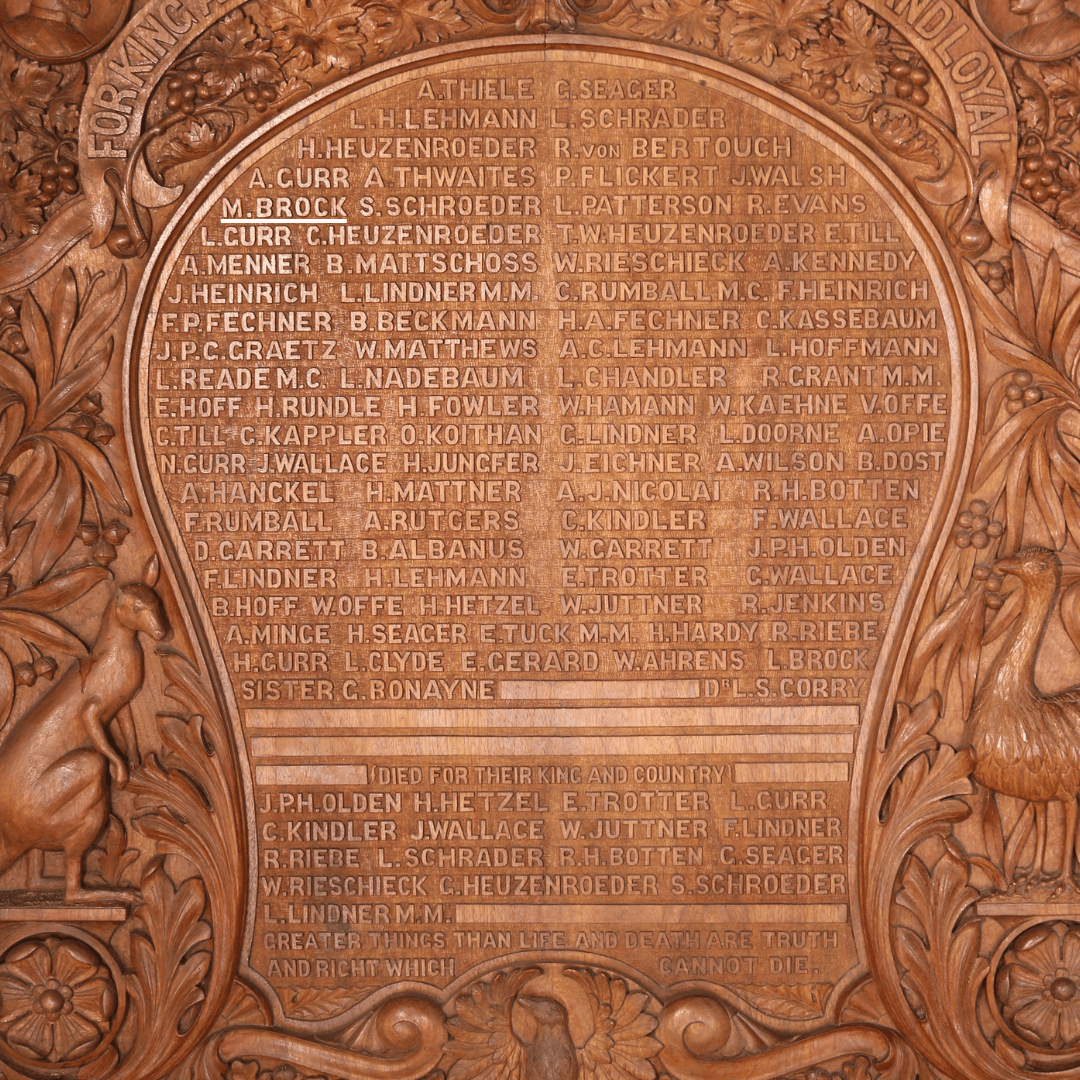
M. W. Brock
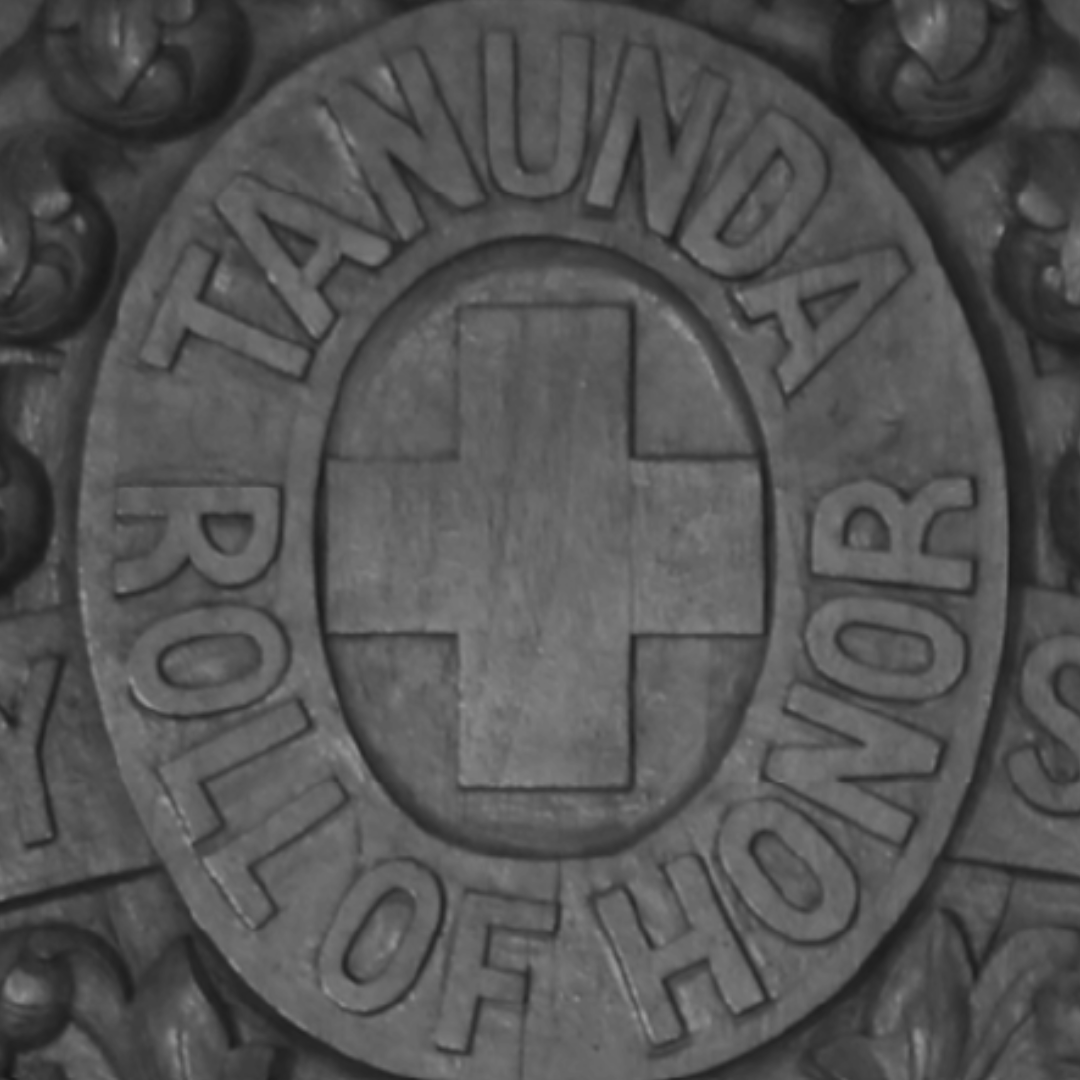
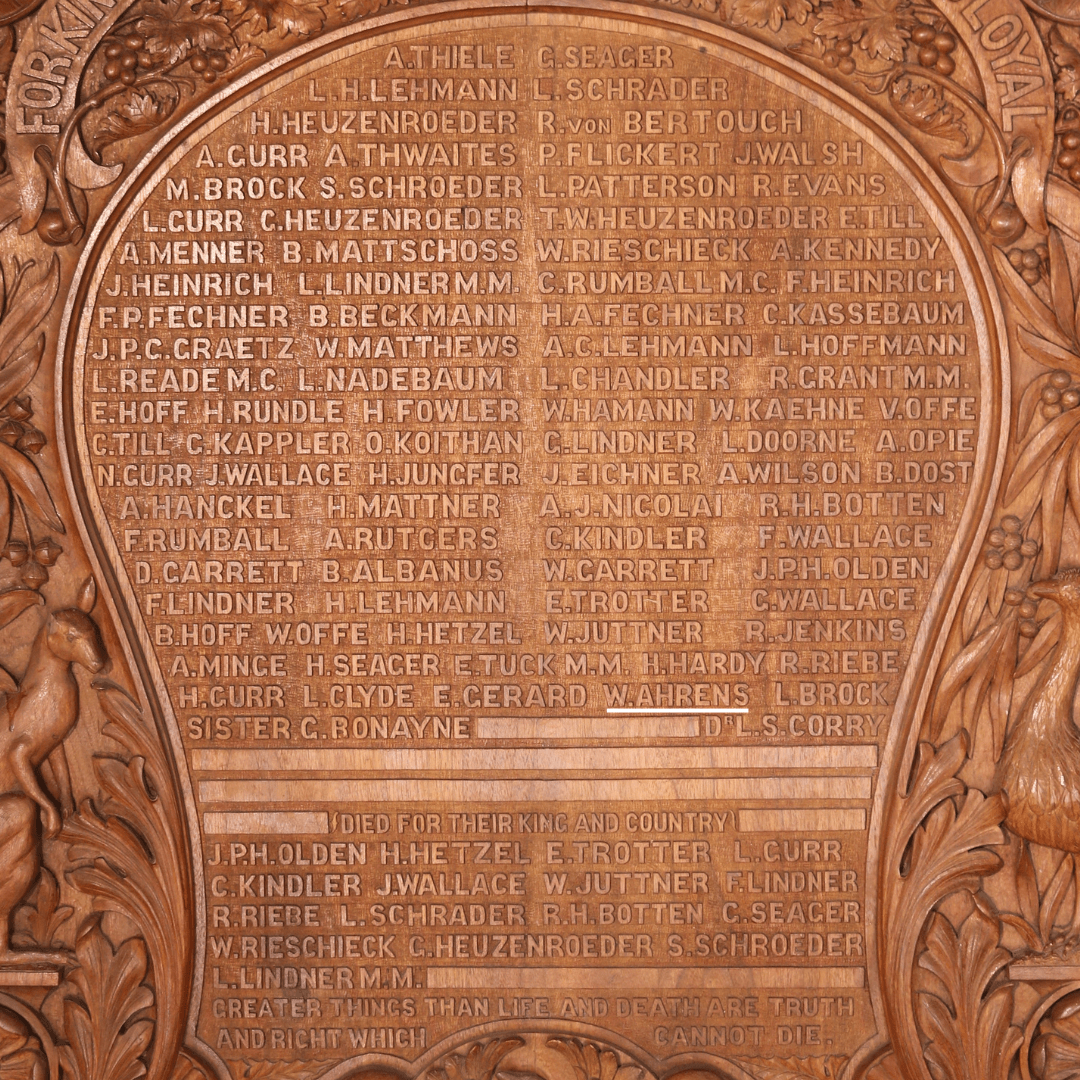
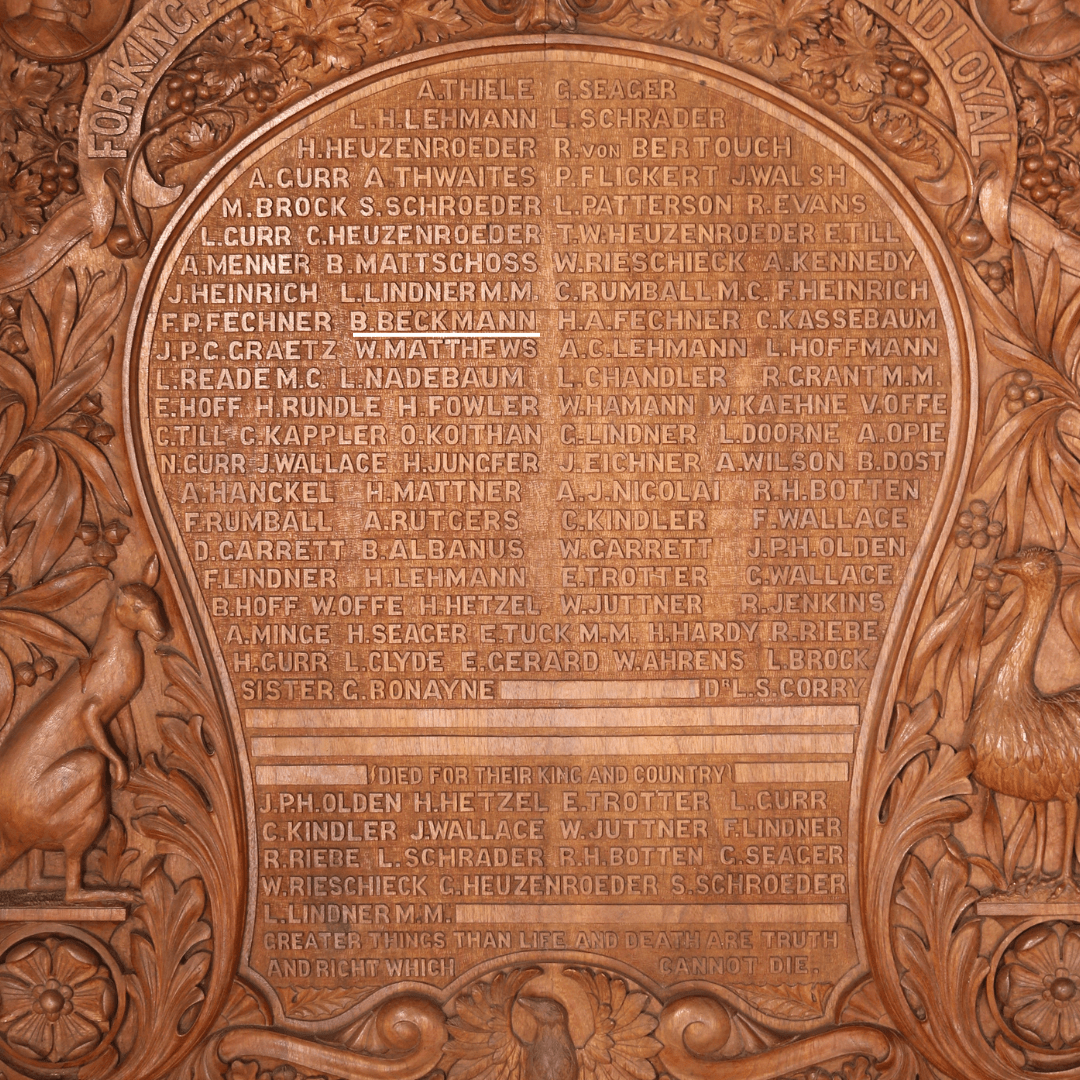
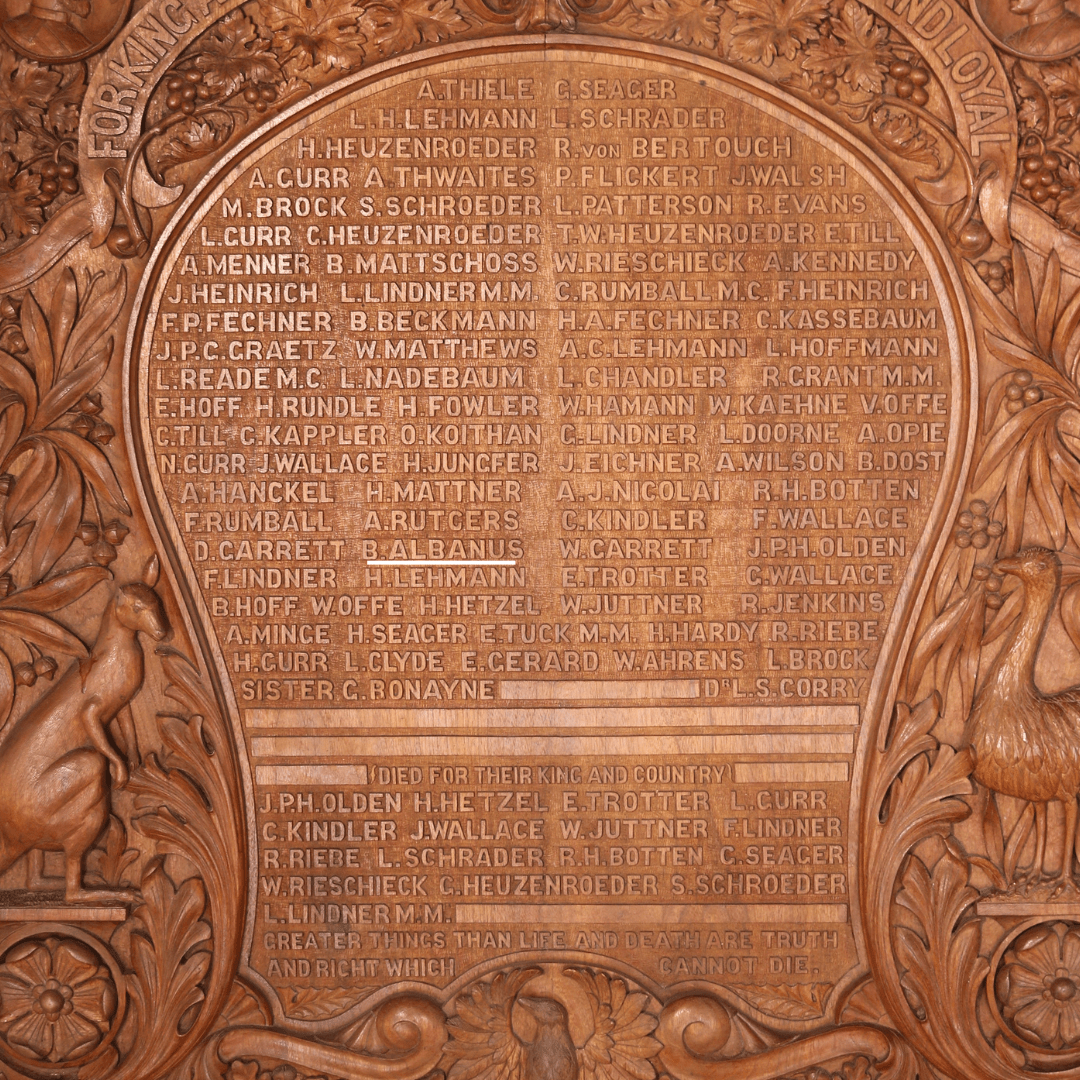
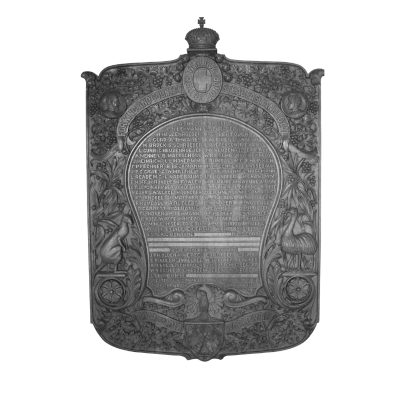
Tanunda Soldiers’ Memorial Hall | WW1 Role of Honour
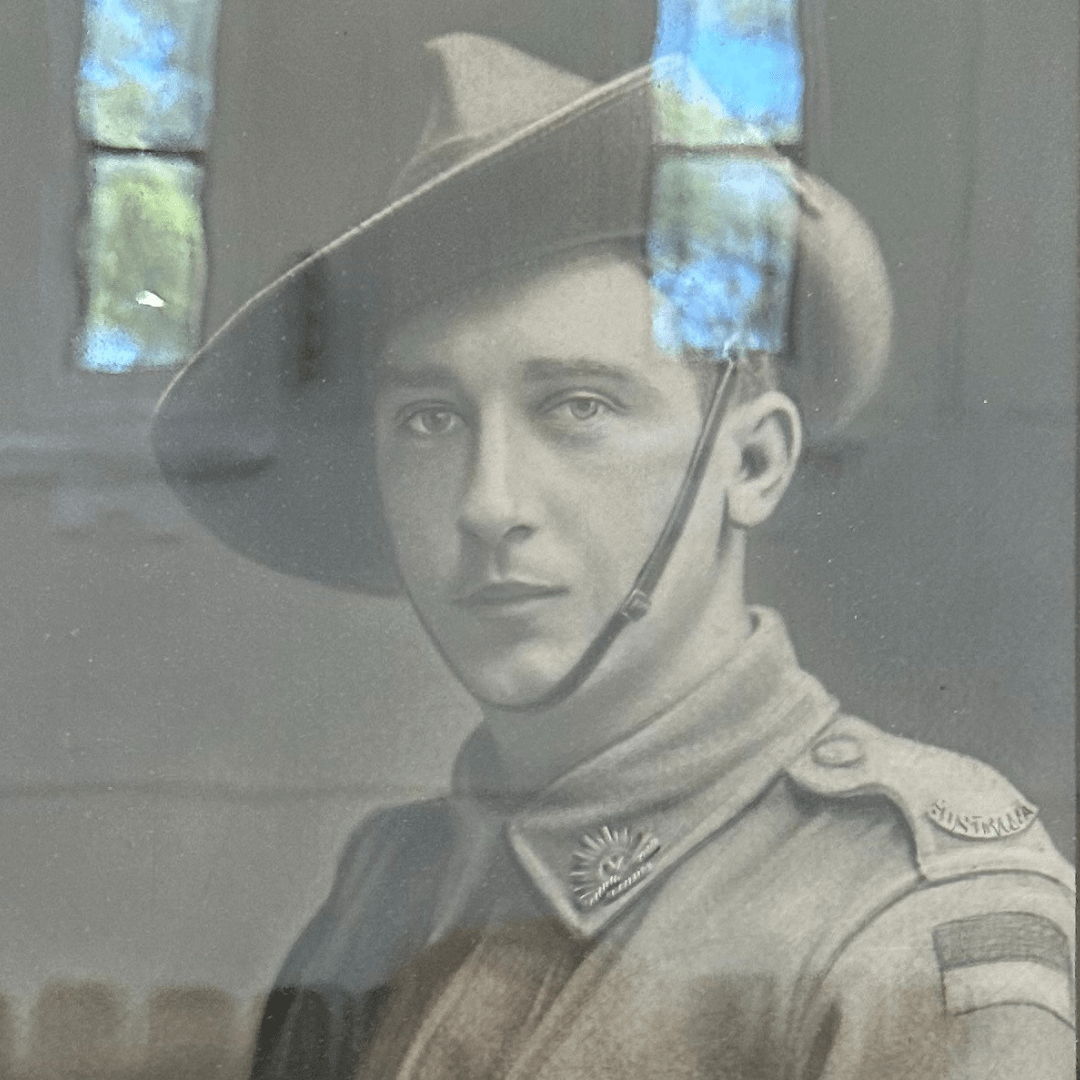
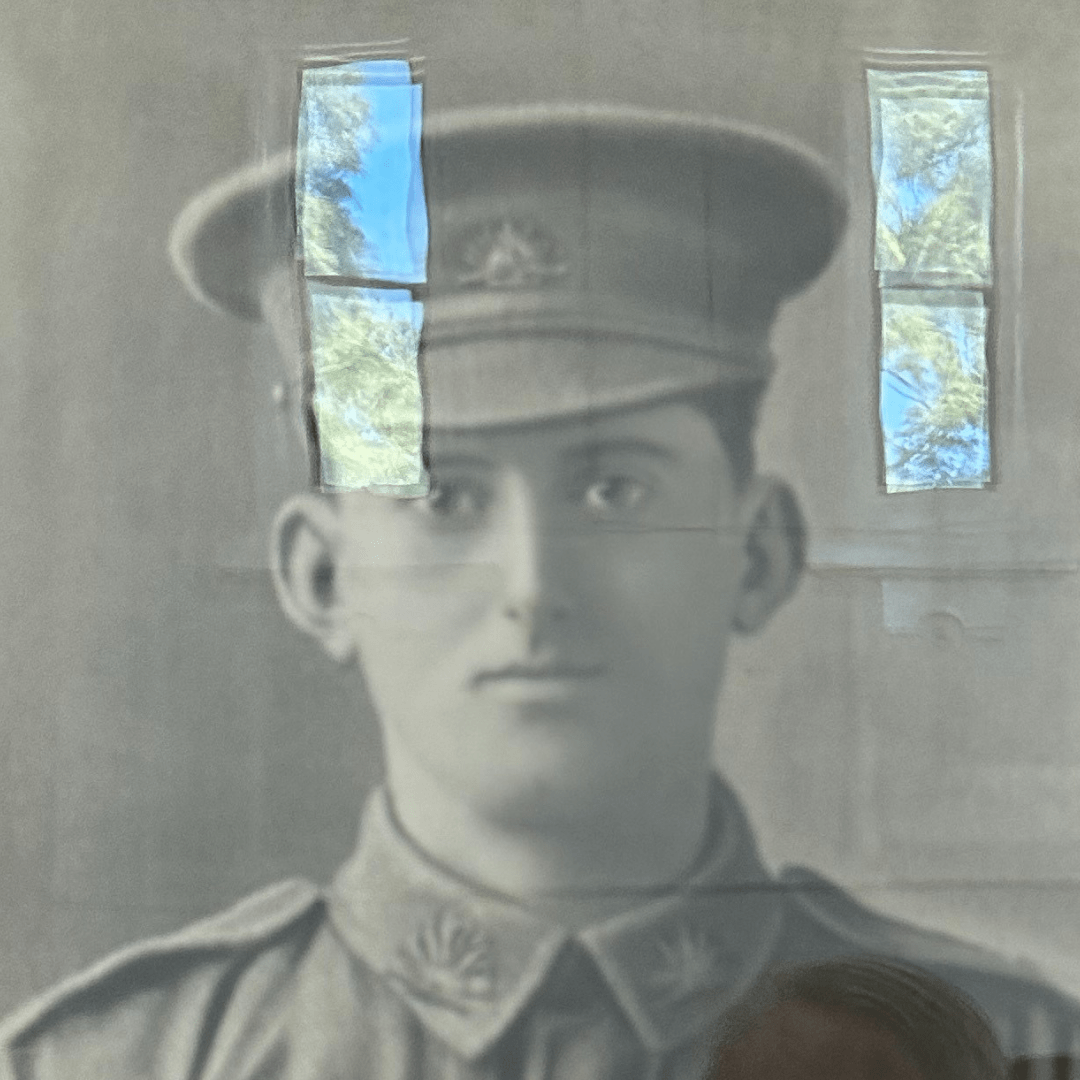
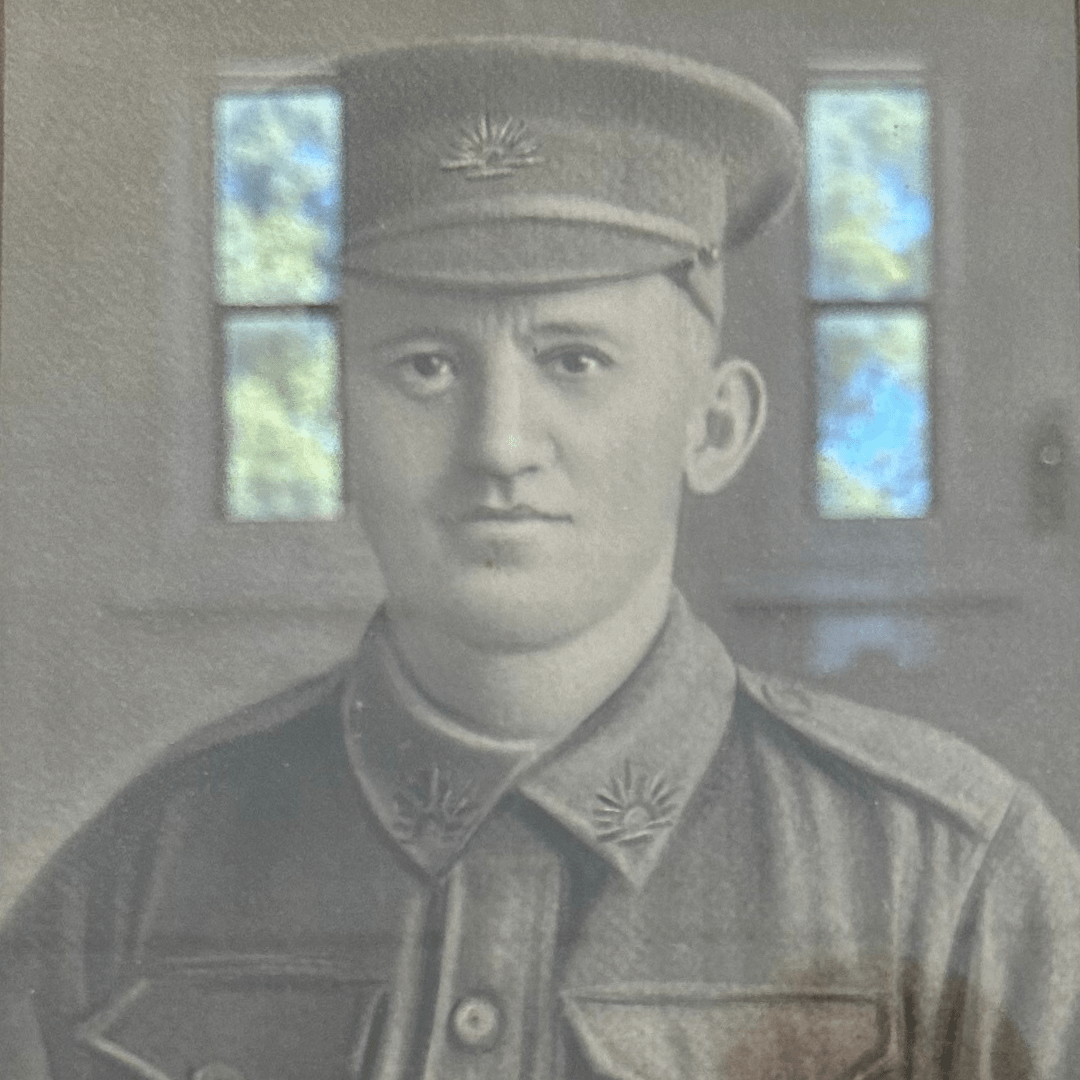
Morgan William Brock
Born: 28 August 1893
Died: 1st April 1945
Buried: Centennial Park Cemetery, Pasadena.
Morgan William was the second son of Thomas and Elizabeth Brock. He had an older brother, four younger brothers, and one younger sister, Edith. His younger brother, John Lawrence, also enlisted in 1915 and they served together in the AIF. The two brothers were given consecutive service numbers, Morgan as 1423, followed immediately by John as 1424.
Thomas Brock lived on a property called ‘Redbanks’, owned by his parents at Gomersal, that now faces onto Schmaal road, but also adjoined Brock Road. All six Brock children went to school at neighbouring New Mecklenberg. Thomas and Elizabeth later moved to a small two story cottage on Presser Road, near the Jane Place intersection, Tanunda, where they ran a farm. The property was called Palmenthal, so named after the two palm trees that flanked the Jane Place swing bridge across the river. John enlisted from Tanunda, however Morgan was still on the family property at Gomersal when enlisted, and his address is given as New Mechlinburgh.
The Brock property ran and trained large numbers of horses, and everyone in the family were skilled horse handlers – including Edith. John and brother Morgan were both immediately identified as Light Horse soldiers and were assigned to the 11/3rd Light Horse, AIF. At 5ft 11 3/4ches, Morgan was slightly taller than John, and had blue eyes with brown hair. Both brothers easily satisfied the demanding early physical criteria for soldier enlistment and were despatched to Egypt for training.
A hand written account from John on the back of a family photograph says:
“…(Morgan and JLB were in Egypt Siani Desert) with 3rd LH Reg. JLB carted off to hosp unconscious with rheumatic fever and malaria after the sandflies got him at a waterhole where was cleaning up after a skirmish with the Turks. His horse was mortally wounded when the Turks bombarded the horse lines. Came to die by Morgan’s horse. Morgan thought JLB must of been killed. Morgan battled on and was probably in a skirmish that captured a few machine guns (he gave the sight of one to Robert Brock’s <indecipherable>. Morgan’s horse eventually killed and Morgan wounded out.”
At home, younger sister, Edith, also played a significant role in Tanunda’s war efforts, donating her time to various initiatives including the Tanunda Red Cross and the local branch of the Cheer Up Society. She was involved in many fundraising programs and contributed to the original publication of The Barossa Cookery Book. Edith contributed two recipes to the first print run of the cookbook in 1917. Edith also wrote a spirited letter to the editor of Adelaide newspaper, The Chronicle, in 1915 condemning the use of the phrase ‘Patriotic German-Australians’ attached to a photograph that included her brothers. In a time when patriotism was the prevailing language and Anti-German sentiment was fierce, Edith’s letter was a proud statement of inclusion and tolerance.
Morgan was admitted to hospital in October 1916 with back pain before being discharged back to his unit. He was admitted to hospital again in November 1916, this time diagnosed with damage to his spine, defined as Spondylitis. He was transferred to Cairo, then despatched home to Australia on the ‘Euripides’ in January 1917. He was discharged from the Australian Army shortly after.
Morgan married Amy Crabb in Adelaide in 1924. He died in 1945, aged 51 years.
Spouse: Amy Crabb
Mother: Elizabeth Brock
Father: Thomas Baird Brock
Recorded Township Connection: Tanunda
Enlisted:7/7/1915
Discharged: 20/04/1917 (med)
Rank: Trooper
Service Number: 1423
Unit: 3rd Light Horse
Virtual War Memorial Link: Virtual War Memorial