M. L. Gurr
Tanunda Soldiers’ Memorial Hall | WW1 Roll of Honour
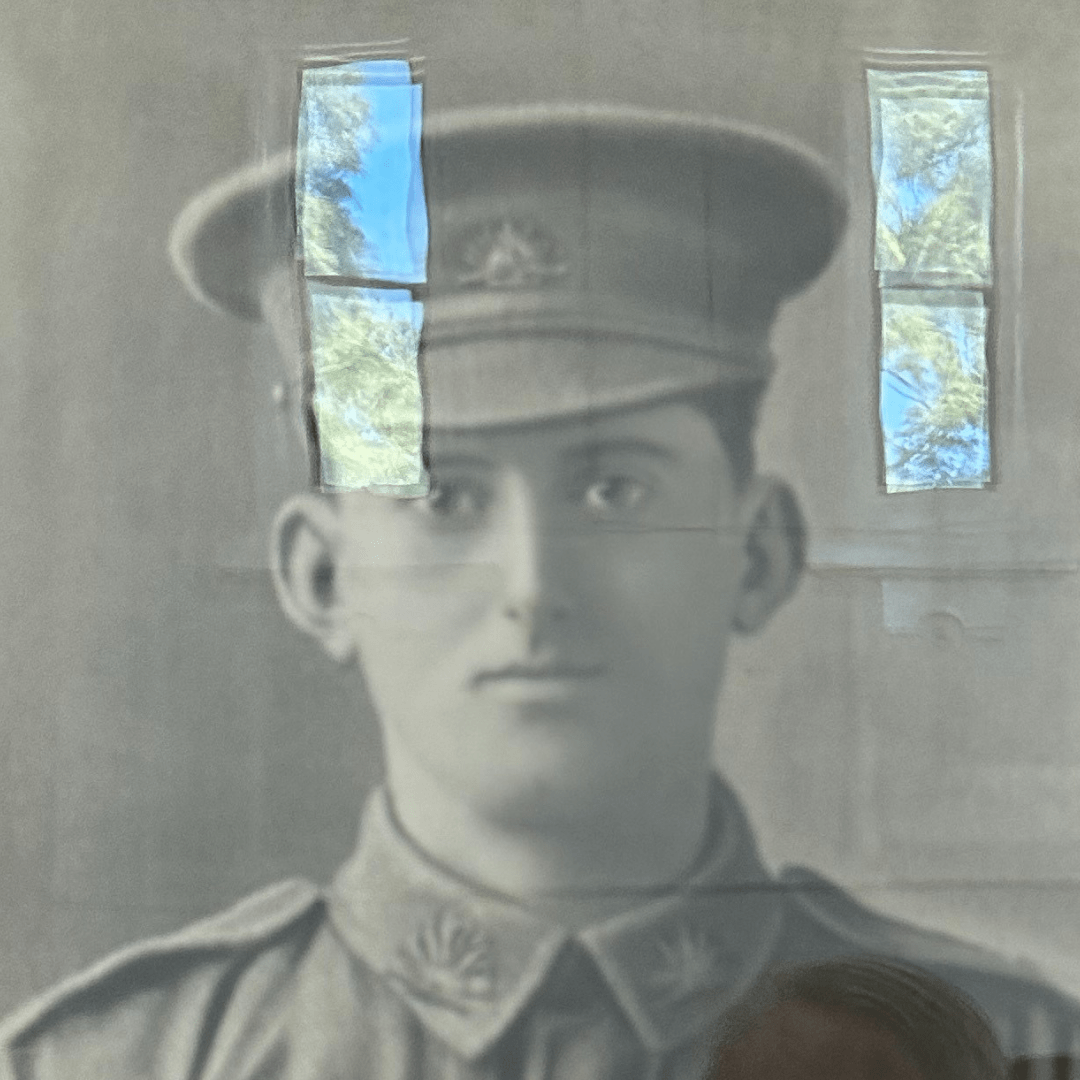
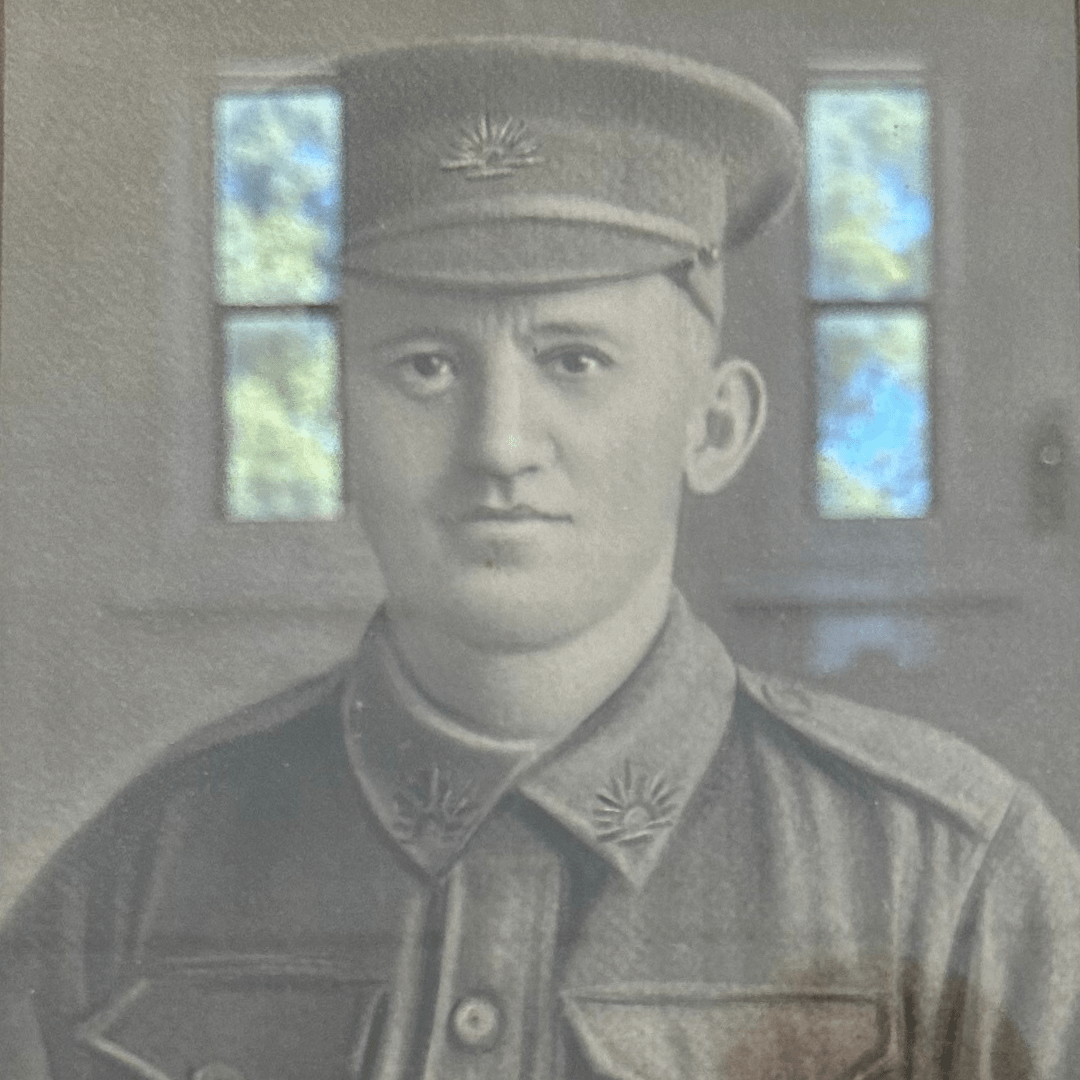
Maurice Leonard Gurr
Born: 25/1/1888
Died: 10th April 1917. MIA
Buried: No known grave
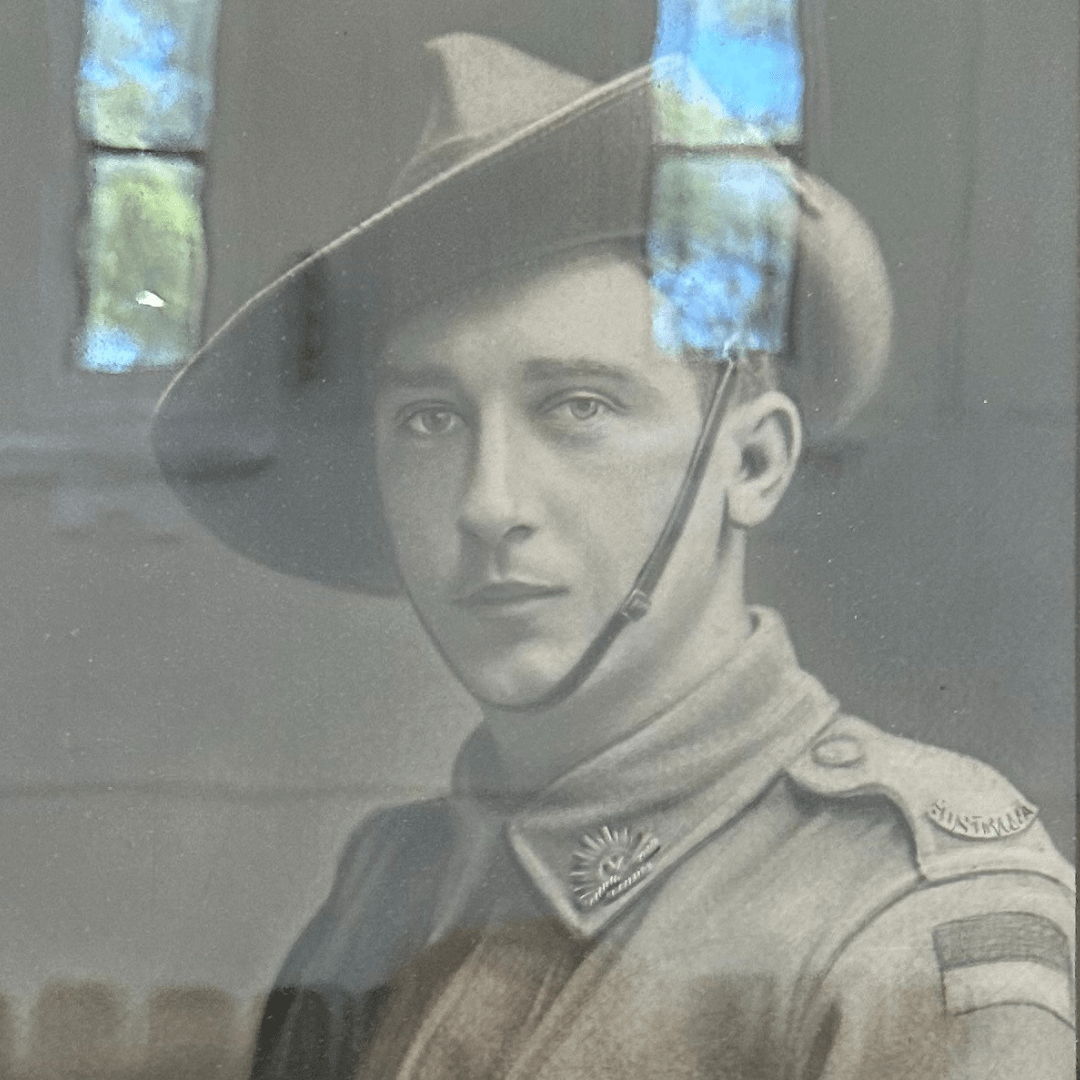
Leonard Gurr was a teenager with three older siblings and five younger ones, when he and his family lived in Tanunda. His father, Joseph Gurr, was an accountant and in 1901 was the manager of Chateau Tanunda Cellars but who also had a very real commitment to civic life. He made a contribution that extended across all parts of public administration, including the appointment as Justice of the Peace as which he presided over local court cases, but also held a position on the Institute committee, and a membership of the Grand United Order of Oddfellows Loyal Lodge (GUOOF) that operated from the Club Hall (later becoming the Tanunda Soldiers’ Memorial Hall). Not just about public administration, Joseph was also president of the Tanunda Cricket Club, and not surprisingly historic newspaper articles regularly mention the Gurr surname amongst the young, successful players on match days.
Every country community loves its sporting stars, so it’s easy to imagine Leonard and his siblings were popular and confident amongst their peers. As a family member of the GUOOF Leonard participated in their annual sports day, and proving that he was not only a good cricketer, is mentioned in the final heats of the Sheffield Handicap – a dash over 130 yards. His brothers are mentioned in several athletics competitions, and his sisters each took out a bicycle race. Handy also with a rifle, Leonard rates several inclusions in the newspaper commentary of the Tanunda Kingship, an annual – and prominent – shooting competition held over a full day which always concluded with a social hosted at the Tanunda Club. The evening dinners were well attended, and were often chaired by his father who gave generous speeches and amidst much back slapping and grand language, raised hearty toasts to all the worthy chaps who participated.
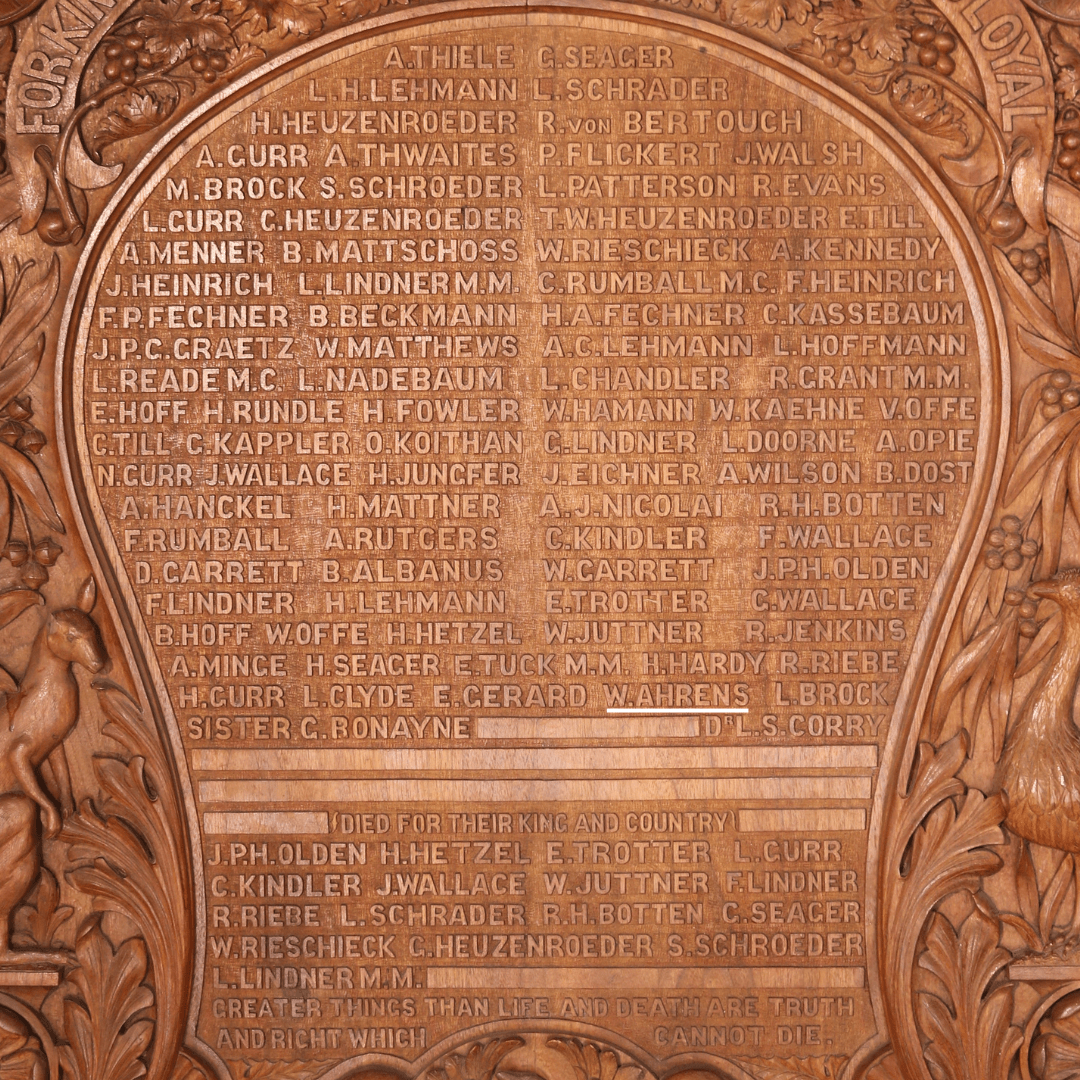
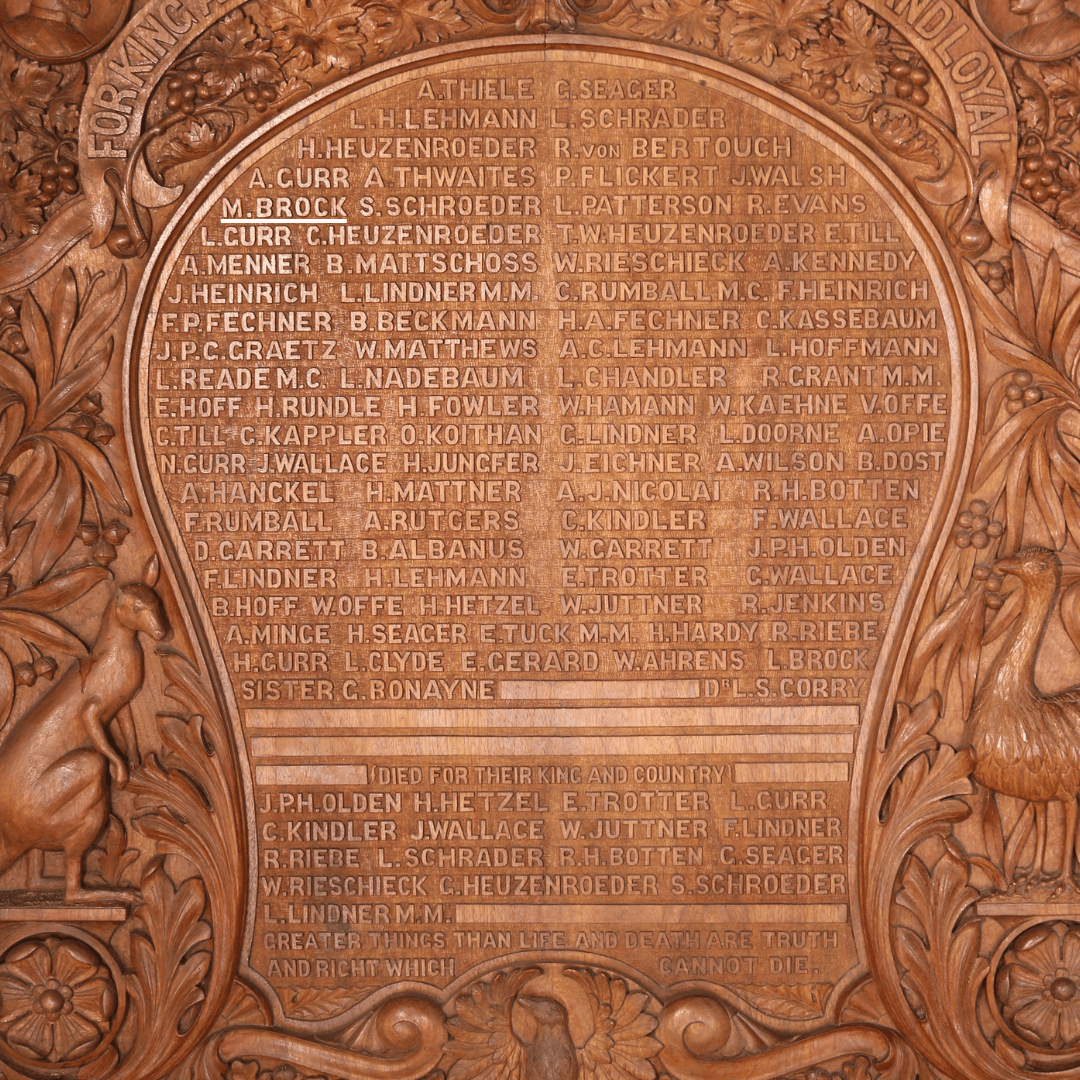
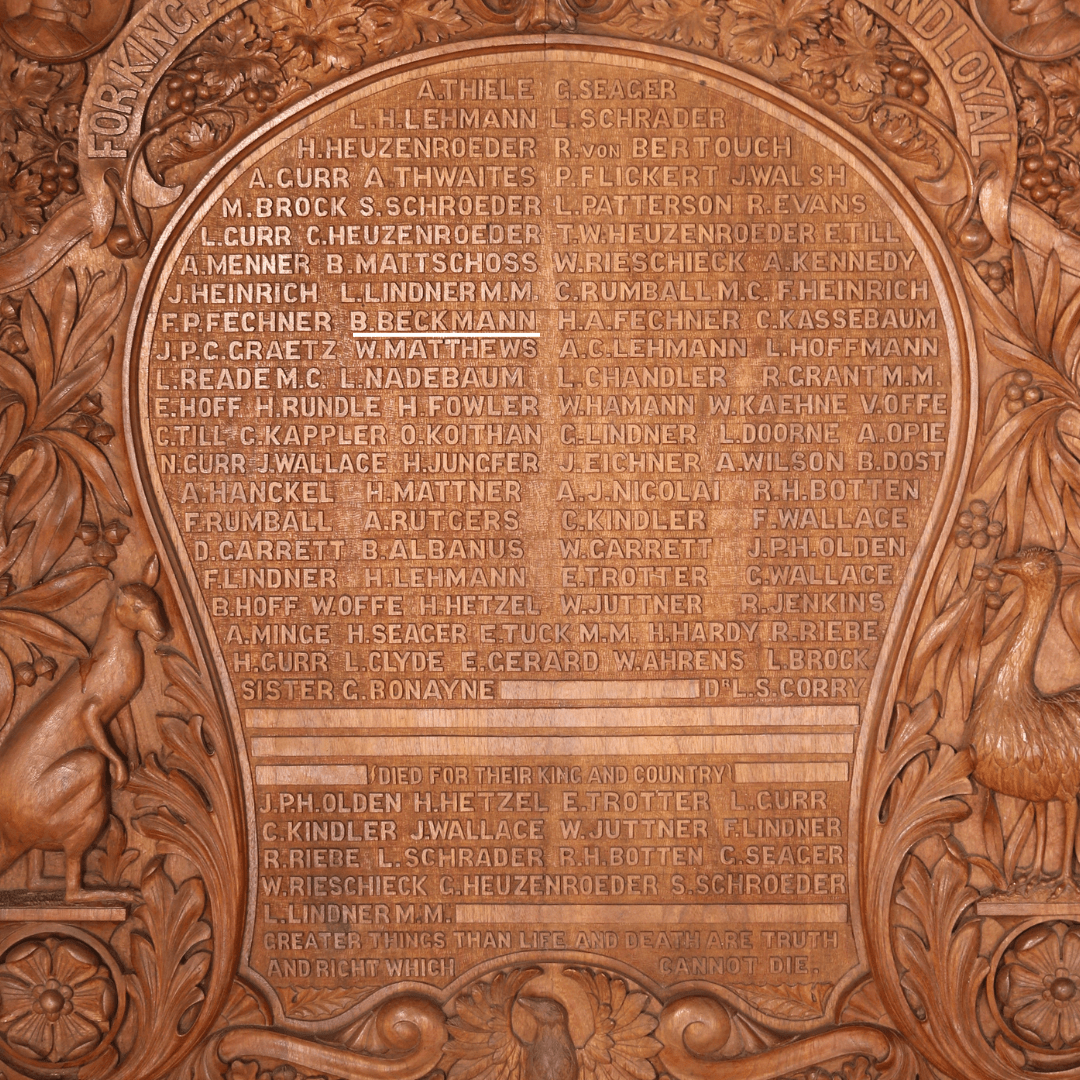
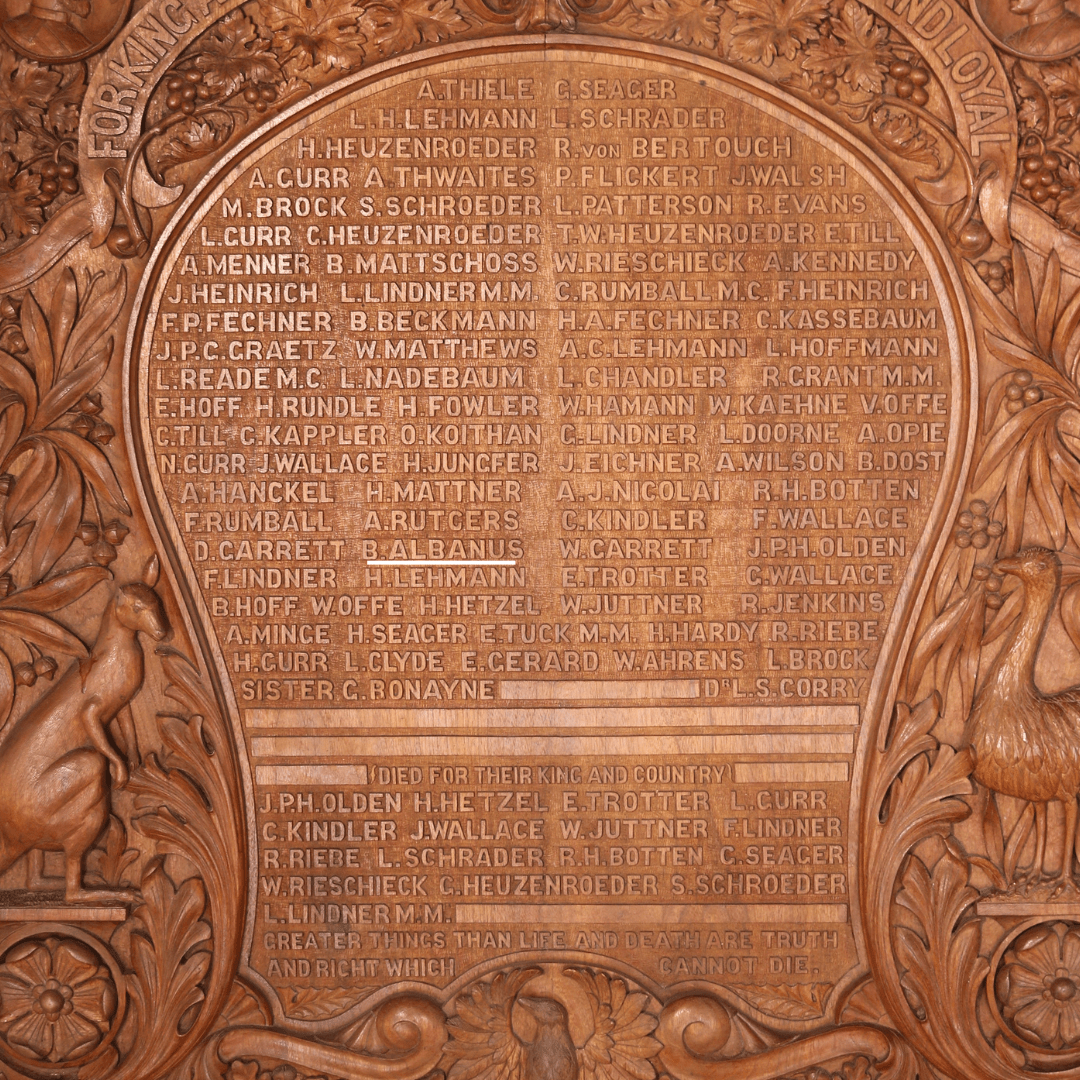
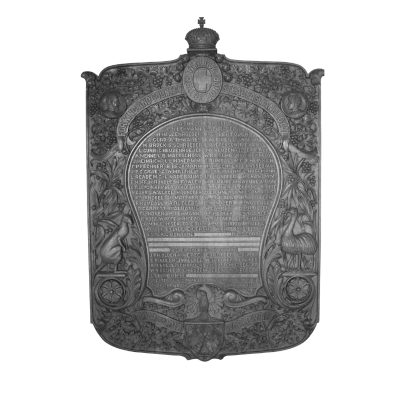
Joseph’s roles across community saw him working closely with other prominent municipal forefathers, and the surnames resonate across our civic history, but also across the WW1 Honor Roll. Surnames like Schroeder, Juttner, Heuzenroeder and Von Bertouch feature in the archival minutes and mentions, all of them being fathers and families with teenage sons, and all of them mixing in the same social circles as Leonard and his siblings. All of them also appearing some short years later, alongside each other, on the carved timber Honor Roll.
Leonard had been born in Kensington, and after Joseph’s tenure at the Chateau ended the family left Tanunda with much fanfare and several prominent farewell events. They returned to the family home, ‘Dalkeith’, on Gurrs Road, Kensington North. Leonard acquired his qualifications as an auctioneer and took up a role with Elders Smith and Goldsborough Mort and was sent to Millicent in the South East as a regional manager. Ever the sporting enthusiast, he took his cricket whites and footy boots with him. Handy as a bowler he is mentioned as being in great form in 1912 when bowling for his new hometown and took 6 for 23. Not so handy with the bat however, he was run out in the same match for 4. The town lamented in March 1915 when Leonard left to enlist, and he was gifted a purse of sovereigns by the Chairman of the District Council, while his teammates at the local footy club give him a set of pipes and military hair brushes.
His younger brother Alvan had already answered the call and had been despatched overseas by the time Leonard enlisted. Another brother, Norman, enlisted only a few weeks after Leonard, so with three sons in uniform, mother Christina was no doubt proud but nervous in equal measure. Her nephew Harald, Leonard’s cousin, also enlisted early the following year, taking the family representation to four. Only six weeks after Leonard signed up Alvan was to be one of the first Australian men to fight for the newly federated nation, and to pile out of a boat on the beach front at Gallipoli. Leonard, Norman and Alvan were all carried by a sense of patriotism and duty, inspired by words from the King, and the Australian Prime Minister who declared that Australia would support the Mother Country and stand beside her down to the last man and the last shilling. The birth of the ANZAC legend, and the sense of identity that we carry with it, was born in these words.
Leonard was diagnosed with erythema (a skin infection) shortly after signing up and spent several weeks in hospital, which delayed his training and embarkation. Norman, although enlisting after Leonard, was dispatched before his older brother, disembarking in the Dardenelles. He, with Alvan, fought in the Gallipoli campaign until it was abandoned and the troops withdrawn late in December.
Leonard was dispatched from Port Adelaide in November 1915 and sent to Alexandra, Egypt, where he was re assigned from the 10th battalion to the 12th, as the AIF strategically mixed inexperienced recruits amongst newly withdrawn and battle-hardened ANZAC veterans. Although assigned to different battalions, no doubt Alvan, Norman and Leonard had much to catch up on.
Leonard in the 12th, Norman in the 10th, and Alvan in the 50th were all deployed into France early in 1916. Leonard’s leadership potential was evident early and in March 1916 he was promoted to Corporal. During the Spring offensive of that year Leonard visited Louis Hoffman in the 10th Battalion and shared the news that another Tanunda lad, Eddie Potter had been killed. Louis writes in his diary…”28th July, 1916 – …was told that Eddie Potter who is in the 12th got killed – Leonard Gurr came and told me”.
Leonard was promoted again in December to Sargeant, was sent to Tiran Court to participate in a training course, then returned to his battalion. Newly minted as a Non-Commissioned-Officer he was leading his men in April 1917 in the Battle of Lagincourt when he halted his troops under heavy shelling while he went back to rescue injured, but he never returned.
The family were devastated and Norman and Alvan tried desperately to find information relating to the disappearance of their brother. Confused rumours sent Norman on a wild goose chase to a casualty clearing station after someone said they had seen him there with an arm wound. Others reported him being in hospital in England, with others again saying his body and identity disc had been found by a neighbouring battalion and he had been buried. All of these were untrue.
Leonard’s sister Mabel, from Kensington, entreated the Red Cross to find information and in 1917 wrote a letter in which she said ‘As you have surmised my other brothers have been doing their best to find trace of him and have told us as much as they can, which is not much and they have about given up hope of hearing of him again”. A court of Enquiry held that same year heard evidence from Leonard’s fellow soldiers, particularly from Sargeant Leonard Charles Bird:
“I belong to the same company as Sgt Gurr and knew him well. I was in the line with him at the time, it was either the 8th or 9th April when he was last seen. I am sorry to say I cannot give you anything definite I was in another part of the line at the time. It was just after daylight he went out to try and bring in some wounded men, that was the last seen of him. We made a thorough search of the place later in the day but could find no trace of him and we have heard nothing since.’
Following the Court of Enquiry Joseph, as executor of his son’s estate, was left to work through the legal ramifications. He wrote to the War Office requesting two copies of Leonard’s death certificate, which were returned with a routine pro-forma letter. His son’s life and existence were then stamped and closed in a paragraph of legal language that coldly decreed “…having been Killed In Action and was proved in the Supreme Court of South Australia on the 11th day of April 1918 by Joseph Gurr of ‘Dalkeith’, Gurrs Road, North Kensington, aforesaid accountant therein named.”
Leonard’s pack was retrieved by Norman and dispatched home to his family. It contained gloves, mittens and Balaklava – quite possibly having been originally knitted and sent to France by his mother or sisters. What a heartbreaking thing to hold them in their hands, knowing he had worn them. Perhaps they were covered in mud, or perhaps if they held them up to their faces they could still smell him among the fibres. His playing cards, a wristlet watch with a broken strap, handkerchiefs, and a knife and fork in a case were included. Among the most personal of his effects were the pipes and brushes gifted by his footy mates at Millicent. He had carried them with him on the front lines the whole time.
Alvan and Norman returned to Australia after the war. Cousin Harald Gurr was Killed in Action, August 1917. All four Gurr boys are listed on the Tanunda Honor Roll.
Maurice Leonard Gurr is listed on the Adelaide Elder Smith and Co Limited WW1 Honour Board, the Australian War Memorial Roll of Honour, Millicent War Memorial, Rose Park Burnside and District – Fallen Soldiers Memorial Trees, Tanunda Roll of Honor, The South Australian National War Memorial, and the Villers Bretonneux Memorial, France.
His body was never found and he has no known grave.
Mother: Christina Gurr
Father: Joseph Gurr
Recorded Township Connection: Unclear
Enlisted: 3/4/1915 (or Enlisted: 11/3/1915 ?)
Discharged: 11/12/1919 enquiry found KIA
Rank: Sergeant
Service Number: 2602
Unit: 12th Bn. AIF
Letters & Links: Sergeant Maurice Leonard Gurr | War Casualty Details 1461433 | CWGC
NAA Record: Digital Item Page Gallery
Virtual War Memorial Link: https://vwma.org.au/explore/people/150060